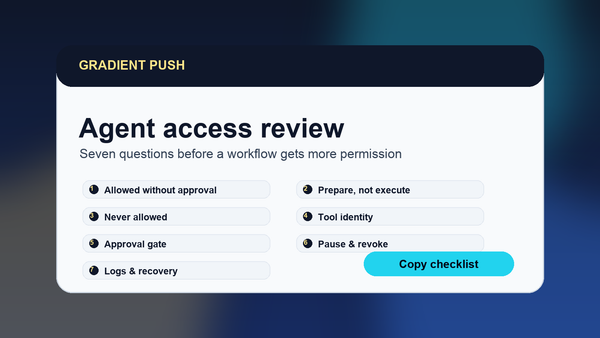
Before giving your agent more access, use this checklist
A seven-question checklist for reviewing an AI agent before giving it more permission.

A seven-question checklist for reviewing an AI agent before giving it more permission.
AI-assisted test repair can reduce maintenance toil, but only if teams define what may heal automatically, what requires review, and what evidence proves the test is still protecting the behavior users depend on.

Most agent evals measure the clean path. Production readiness depends on the messy path: tools, time, retries, handoffs, stale state, trace evidence, and recovery.
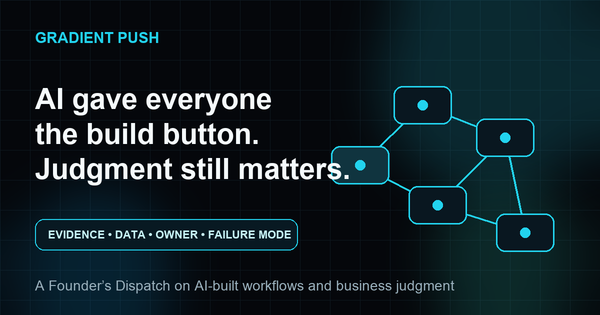
Before an AI-built workflow enters the business, check the evidence, data, system owner, failure mode, metric, and kill condition.
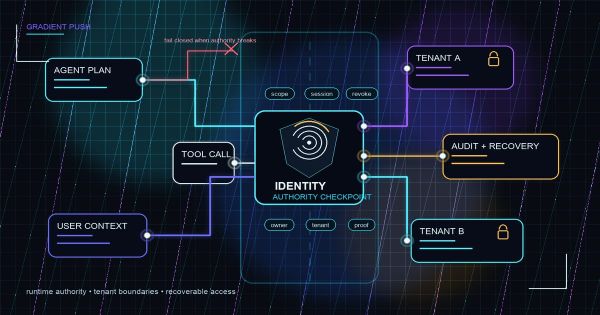
If orchestration decides sequence, identity decides legitimacy: what an agent can do, for whom, under what authority, across which tenant boundary, and how operators recover when that authority breaks.
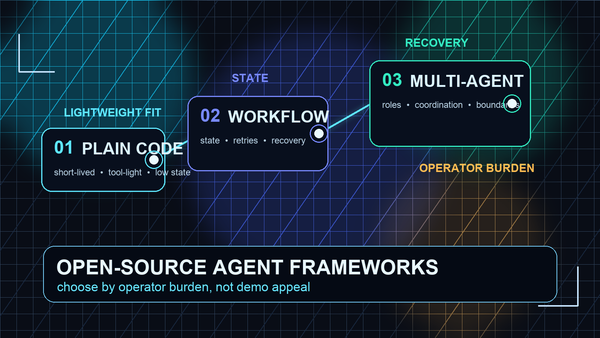
Use an escalation ladder, not a hype ladder: stay in plain code longer than the market wants you to, move to a workflow framework when state and recovery become real, and reach for multi-agent coordination only when the job genuinely needs it.
Why long-running agents turn memory design into an ops problem, and what teams should govern before background workflows become invisible operational risk.
A2A turns agent-to-agent communication into a distributed-systems problem, with identity, task ownership, retries, trust, and failure handling now sitting on the critical path.
MCP servers are becoming production dependencies for agent systems. How to inventory ownership, permissions, observability, and failure modes before they become hidden infrastructure risk.
AI teams accumulate models faster than they build controls. How to manage model sprawl with registries, drift monitoring, rollbacks, and consolidation.
Anthropic did not just announce a model. It announced a room, and the real moat may be permission itself.

AI coding tools have genuinely made teams faster. The Harness 2026 State of DevOps report confirms it: AI coding adoption is up, velocity metrics are up, output is up. The same report notes that security and DevOps maturity haven't kept pace with the acceleration. More code is shipping,

Issue #8
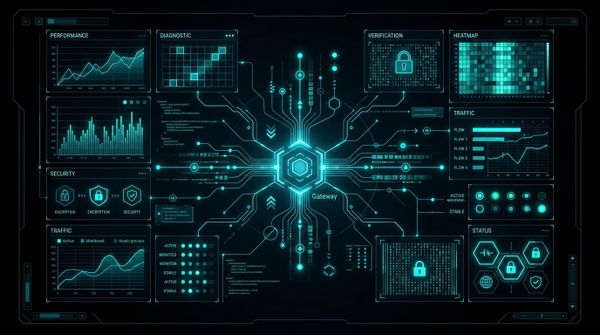
A single agent handling predictable traffic is the easy case. Add a gateway, configure it correctly per Parts 1 and 2, and it works. The failure modes at scale are different in kind. An indirect prompt injection embedded in a document your agent was summarizing. A multi-agent workflow where
newsletter
The gap between 'I added a gateway' and 'my gateway is actually working.' Four configuration decisions that separate coverage from false confidence.
founders-dispatch
What happens when your system silently substitutes and you don't find out until after you've acted on the result.

Agent Infrastructure
An agent gateway is the infrastructure layer between your agent and everything it talks to. This is Part 1 of a three-part series on the control plane your agent is missing.
founders-dispatch
What we spent, what we got, and the distance between possible and needed.
newsletter
There's a category of AI bug that doesn't announce itself. The agent worked fine last week. Nothing in your codebase changed. No deployment, no model update, no infrastructure incident. But the output quality is worse, customer support tickets are up, and when you dig in, the
founders-dispatch
My job title is AI Solutions Developer. There was no listing. No hiring committee. The role didn't exist until I made it exist by doing work nobody else could do and proving it was worth formalizing. I think that's going to be the path for most

newsletter
The most common mistake developers make when choosing an agent framework is treating it like a software comparison article. They pull up a table of features, check off which framework supports memory, which has the cleanest API, which has the biggest community. Then they pick one and spend three weeks
Issue #3
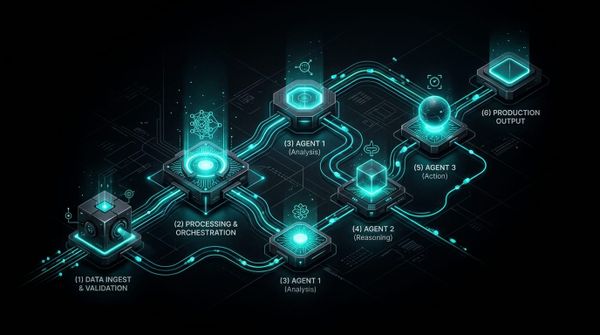
The tutorials all end the same way. The agent works. It classifies the ticket, routes the email, summarizes the document. You run it a few times, it looks good, you ship it. Three weeks later it's hallucinating customer data at 2 AM, retrying in an infinite loop, burning

Issue #2
When an agent fails, most developers look for a better model. The problem is almost always the context.

Issue #1
The productivity gains are real. They're also narrower, weirder, and more conditional than the marketing wants you to believe.